

GK KUNTEN PRO vs KUNTEN: Every Confirmed Hardware Change
A source-based GK KUNTEN PRO vs KUNTEN comparison covering the KUN 2 driver, excursion, magnetic circuit, dual-stage damping and the limits of current evidence.
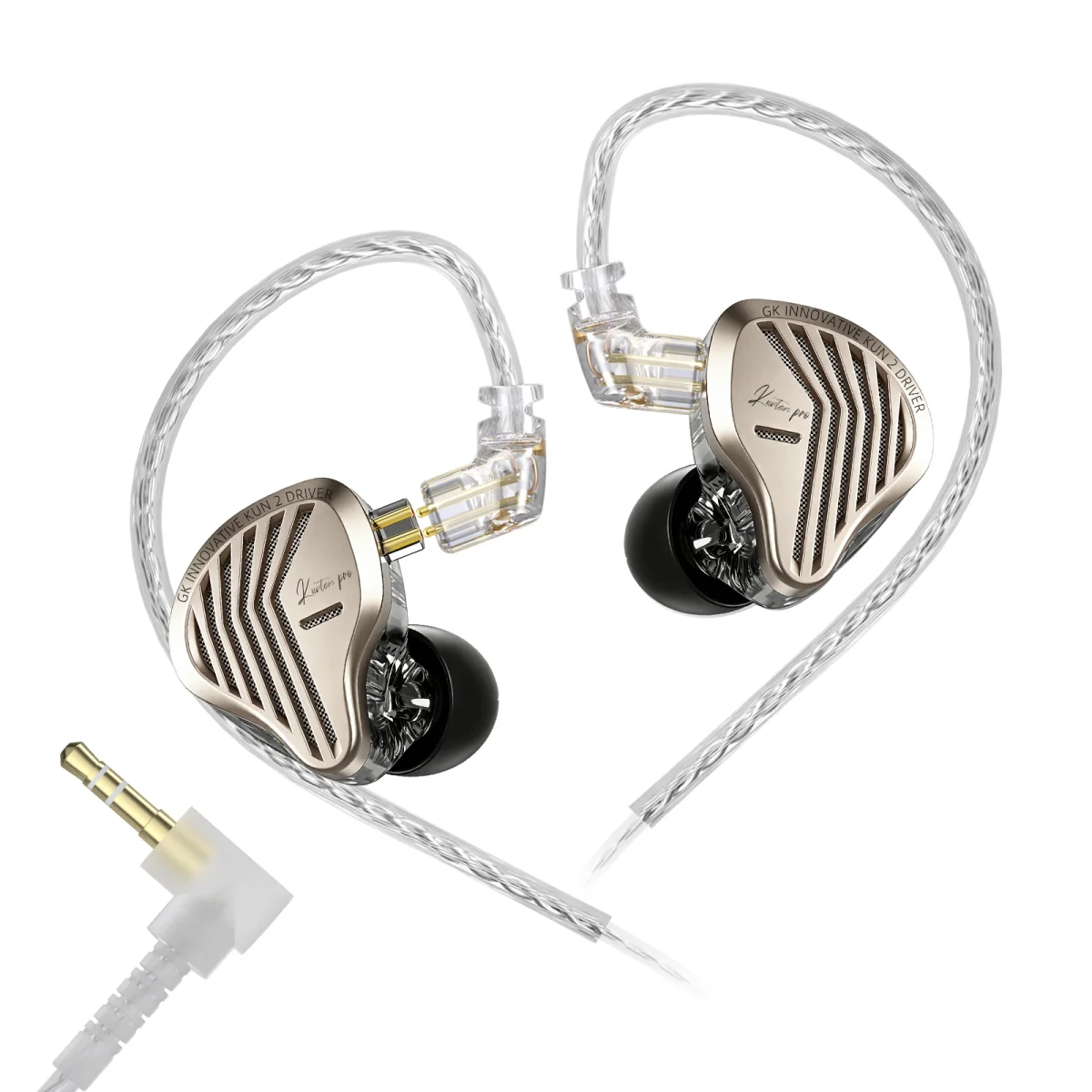
Should you replace your KUNTEN with KUNTEN PRO?
Keep your KUNTEN if its fit, cable and connection already meet your needs. Consider KUNTEN PRO when a confirmed feature solves a specific problem: GK lists the KUN 2 driver, a revised magnetic circuit and dual-stage damping, with 3.5mm and Type-C cable options. Those changes do not prove better sound. Before paying more, confirm the exact connector and microphone bundle. Compare both offers on the same day, for the same destination, with shipping, tax and any adapter included.
Check KUNTEN connection and seller options or check KUNTEN PRO variants and buying details.
A comparison of confirmed hardware, not a listening verdict
GK KUNTEN PRO keeps the KUNTEN name, but the official comparison sheet describes changes to the driver mechanics, magnetic system and acoustic filtering. This guide compares only those confirmed points. It does not declare a winner or turn manufacturer descriptions into independent sound-quality findings.
KUNTEN vs KUNTEN PRO at a glance
| Area | KUNTEN | KUNTEN PRO |
|---|---|---|
| Dynamic driver | KUN dynamic driver | 2nd-Gen KUN dynamic driver |
| Diaphragm surround | Original design | Re-tuned surround compliance |
| Voice coil | Large voice coil | Optimized voice-coil travel |
| Low-frequency excursion | Original specification | Extended low-frequency excursion |
| Magnetic circuit | Original magnetic circuit | 2nd-gen magnetic circuit system |
| Filtering | Professional-grade filtering | Dual-Stage damping filter |
| Magnetic gap | Approximately 0.15mm | Retained flagship 0.15mm gap |
The main change starts with diaphragm travel
The original KUNTEN uses a full-range KUN dynamic driver. For KUNTEN PRO, GK says it adjusted surround compliance and voice-coil travel so the diaphragm can move farther at low frequencies while staying controlled. Greater excursion is a physical capability; the audible result still depends on tuning, seal, distortion and playback level.
The second-generation magnetic circuit is intended to provide drive across that longer motion. The official material describes deeper, fuller and more defined bass, but this remains the manufacturer's target until independent measurements and listening tests are available.
Why the dual-stage damping filter matters
More low-frequency excursion can add energy that must be controlled acoustically. GK assigns that job to a dual-stage damping filter. The company says it reduces ringing and muddiness so additional bass does not mask vocals or small details. Our KUN 2 and dual-stage damping guide explains why a driver upgrade and an acoustic filter solve different parts of the system.
What the PRO keeps from KUNTEN
The line retains a single dynamic-driver architecture, the flagship 0.15mm magnetic gap, a transparent enclosure, a skeletal metal faceplate and a detachable 0.78mm 2-pin cable interface. KUNTEN PRO adds Matte Black and Champagne Gold finishes and lists 3.5mm and Type-C cable options.
What cannot be compared yet
The current KUNTEN PRO product page links to a seller listing, but final price and availability vary by region and variant. The frequency-response graph in the product sheet is a manufacturer measurement, not a matched third-party comparison. We therefore do not score tonality, technical performance, value or comfort between generations.
For the complete published values, see the GK KUNTEN PRO specifications. The KUNTEN product page covers the original model.
Does the confirmed upgrade solve a problem you have?
An existing KUNTEN owner should first identify a reason to change. If the present pair fits, reaches a usable level with the current source and has no cable or reliability problem, the new generation name alone is not a reason to replace it. The confirmed comparison is about mechanics and filtering. It does not establish that every listener will prefer the PRO, that every music style benefits, or that buying a new pair is better value than keeping a working one.
The electrical figures are not the main upgrade claim
Both catalog records list a nominal 43Ω impedance and a 109dB/mW sensitivity figure; the PRO sheet additionally specifies 1kHz for that sensitivity. Equal-looking figures do not document identical acoustic response, but they also do not substantiate a large improvement in required amplifier power. The recorded change is not a move to a radically different nominal load. Do not buy a higher-output dongle just because the product name adds PRO. Confirm the source you already use and the actual cable configuration before attributing a volume or noise difference to the driver.
3.5mm and Type-C answer different compatibility questions
The 3.5mm option needs an analog headphone output or a suitable adapter. A Type-C connector identifies the physical interface, but the earphone impedance cannot establish the digital interface, microphone behavior, operating-system support or controls of the cable offered in a particular bundle. Ask the seller about the exact phone, laptop or console you intend to use. Check whether the microphone option is included and whether return terms cover an incompatible device. The detachable earpiece connection and the source-side connector are separate parts of that check.
A retained magnetic gap is not a performance score
GK describes a retained approximately 0.15mm magnetic gap alongside a new magnetic circuit and changes to surround compliance and voice-coil travel. Retaining one dimension while changing other mechanics is consistent with a revised design, but it does not quantify the force over the whole excursion or the distortion at a given output. A number in a construction drawing is not an acoustic ranking. The dual-stage filter is likewise a stated construction feature: its audible contribution would need a matched response or distortion comparison, not only a list of parts.
How to read the graphs and pictures that come with the product
The product graphics are source material from GK. They help identify the claimed design and available configurations, but a frequency-response image needs its conditions before it can support a precise acoustic conclusion. Look for the tested sample, coupler, insertion, input level, smoothing and repeatability. Check that both generations were measured with a comparable setup. Do not infer your own bass balance or treble comfort from the title of a graph, a frequency-range label or a promotional adjective. Ear-tip seal and fit can change the experience independently of the advertised mechanism.
Compare the whole purchase, not a displayed starting price
Record the exact color, source connector and microphone option for each offer, then compare prices in one currency and destination on the same date. Include shipping, taxes, the cost of an adapter you do not own and the return path if the fit is unsuitable. The cheapest headline price may describe a different cable or bundle. The current seller listing controls the transaction; neither the product guide nor the historical IEM price band promises current stock, a local warranty or a particular delivery time. A useful comparison includes those unresolved costs instead of filling them with assumptions.
Evidence that would change this comparison
A documented matched test could establish whether the longer-excursion design changes low-frequency output or distortion at comparable levels. A clearly attributed listening comparison could describe a particular person’s preference with identified source, ear tips and fit. Neither result should be invented while it is missing. Until such material is available, the valid conclusion is that the PRO has documented design changes and extra listed source-connector choices, while their audible value to a specific owner remains a separate question.
A practical decision note to keep
Write one sentence naming the problem you need to solve, one line for each confirmed model and cable configuration, and one line for any missing evidence. If a seller answer or a source image does not resolve a critical compatibility question, wait for a better answer. If the current KUNTEN already meets the requirement, keeping it is a valid outcome. For our definitions of catalog fields, independent measurements and review dates, read the editorial method linked with this article. Corrections should identify the field, page URL, source URL and exact version so the same claim can be checked.
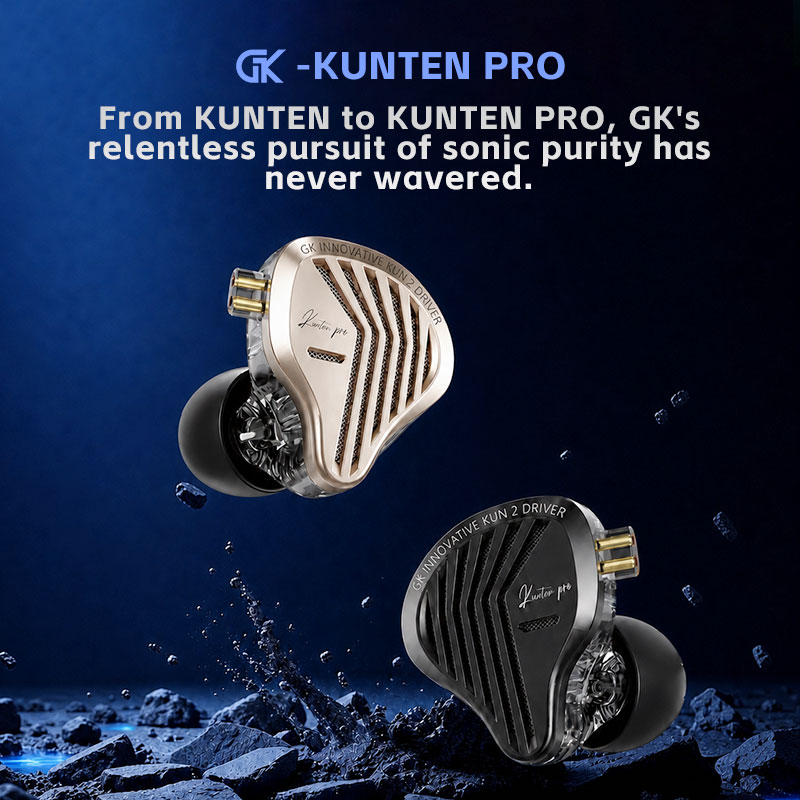
GK KUNTEN PRO KUN 2 Dynamic IEM
GK KUNTEN PRO uses one 10mm KUN 2 dynamic driver, a dual-stage damping filter and a detachable 0.78mm 2-pin cable. The GK sheet lists 43Ω, 109dB/mW at 1kHz, and 3.5mm or Type-C options.
AliExpress purchase links may be affiliate links. GK AudioLab may earn a commission from qualifying purchases.